- Now Open in Finacial District and Kondapur
- Customer Care- 10AM to 7PM
- +91-9933332442

Absorbable suture threads for instant facial lifting and long-term collagen stimulation. PDO and PLLA threads lift sagging skin, define contours. Non-surgical facelift alternative. Minimal downtime, natural results.
What is Thread Lift?
Thread lift (also called PDO thread lift or barbed suture lift) is a minimally invasive procedure using absorbable surgical sutures inserted beneath the skin to mechanically lift sagging facial tissues while simultaneously stimulating collagen production for long-term skin quality improvement. Unlike traditional facelift surgery requiring incisions and tissue removal, thread lifts work through strategic placement of specialized threads with tiny cones or barbs that anchor into tissue, physically elevating drooping areas—jowls, cheeks, neck, brows—creating immediate visible lift.
Two primary thread types: PDO (Polydioxanone) threads dissolve over 6-8 months, providing mechanical lift initially then prolonged collagen stimulation as body metabolizes them. PLLA (Poly-L-Lactic Acid) threads last 12-18 months, offering stronger structural support and more robust collagen production. Threads come in various configurations: barbed/cog threads for maximum lifting, smooth threads for collagen stimulation and skin quality, mesh threads for comprehensive support. The procedure is performed under local anesthesia through tiny entry points—no visible scars. Results combine instant lift (from thread placement) with progressive improvement over 2-6 months (from collagen remodeling). Ideal for mild-moderate sagging in patients not ready for surgery. Results last 12-18 months typically before threads fully absorb and maintenance treatment recommended.
Thread Lift at Zennara is performed by expert practitioners trained in advanced thread techniques. Experience immediate lifting plus long-term collagen rejuvenation with premium absorbable threads.
Instant lift with progressive improvement
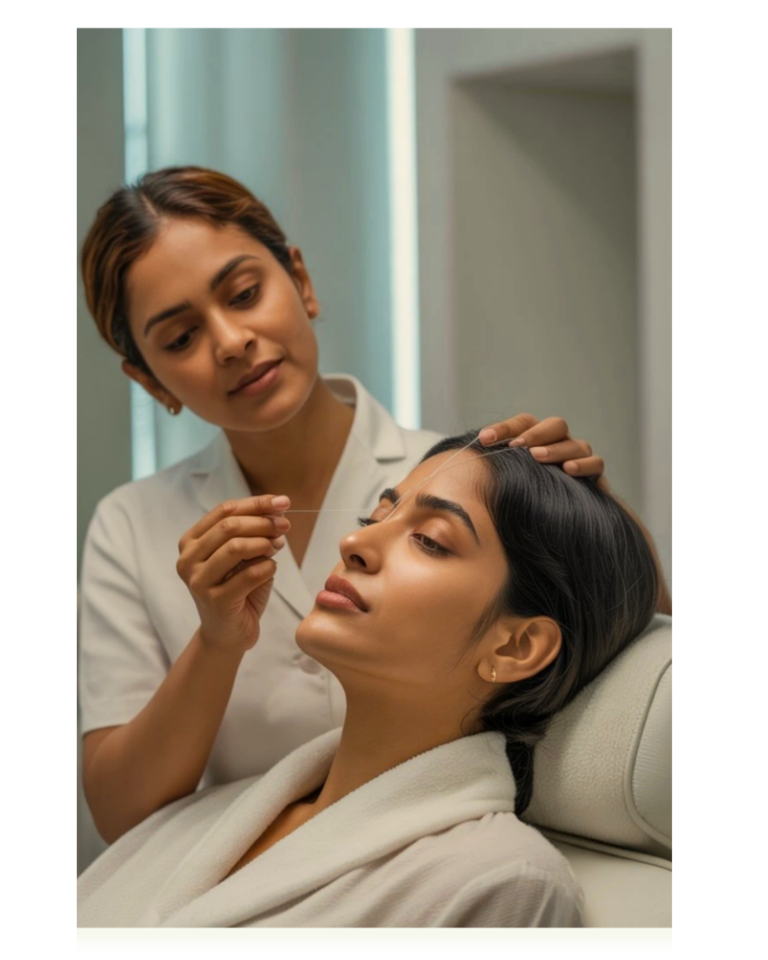

Thread Types
Thread Types
Polydioxanone – Gold standard absorbable threads. Medical-grade suture material used in surgery for decades. Excellent safety profile. Dissolves completely over 6-8 months while stimulating natural collagen.
Key Features:
Results Duration:
Best For: Most patients, mild-moderate sagging, overall facial rejuvenation, first-time thread lift
Poly-L-Lactic Acid – Stronger, longer-lasting threads. Same material as Sculptra dermal filler. Provides robust structural support. Superior collagen production. Longer durability than PDO.
Key Features:
Results Duration:
Best For: More pronounced sagging, jawline/neck lifting, longer-lasting results desired, previous PDO experience
Meet the masters of aesthetics

M.D. (Dermatology, Venereology & Leprosy),
F.C.P.S. (Dermatology & Venereology) D.D.V
(CPS, Gold Medallist), M.B.B.S.

M.D. (Dermatology, Venereology & Leprosy),
F.C.P.S. (Dermatology & Venereology) D.D.V
(CPS, Gold Medallist), M.B.B.S.

M.B.B.S, M.D. Dermatology and
Fellowship in Cosmetology
M.B.B.S., M.D. in Dermatology,
Venereology & Leprology

M.B.B.S., M.D. in Dermatology,
Venereology & Leprology

M.B.B.S , M.D. Dermatology, Venereology & Leprosy (Gold medal)
M.D. (Dermatology, Venereology & Leprosy), F.C.P.S. (Dermatology & Venereology) D.D.V (CPS, Gold Medallist), M.B.B.S.
M.D. (Dermatology, Venereology & Leprosy), F.C.P.S. (Dermatology & Venereology) D.D.V (CPS, Gold Medallist), M.B.B.S.
M.B.B.S, M.D. Dermatology and
Fellowship in Cosmetology
M.B.B.S., M.D. in Dermatology,
Venereology & Leprology
M.B.B.S., M.D. in Dermatology,
Venereology & Leprology
M.B.B.S , M.D. Dermatology,
Venereology & Leprosy (Gold medal)
Celebrity Love for Zennara
Celebrity Love for Zennara

Zennara was such a good, relaxing experience!
I try a lot of different facials from many places, and I can say that the ones at Zennara are my favourite and get my face seriously glowing.
“Zennara was such a good, relaxing experience! I try a lot of different facials from many places, and I can say that the ones at Zennara are my favourite and get my face seriously glowing.”
Zennara was such a good, relaxing experience!
I try a lot of different facials from many places, and I can say that the ones at Zennara are my favourite and get my face seriously glowing.

“I love the opinions and suggestions given by the panel of doctors and the wonderful team here at Zennara”

“Right from the welcoming staff to the incredible team of doctors they have here. I truly feel well cared for and can confidently say I’m a very happy customer.”

“Come to Zennara—where every visit is a step closer to inner peace, and the power of zen gives you a natural, radiant glow.”
“Zennara was such a good, relaxing experience!
I try a lot of different facials from many places, and I can say that the ones at Zennara are my favourite and get my face seriously glowing.”
“I love the opinions and suggestions given by the panel of doctors and the wonderful team here at Zennara”
“Right from the welcoming staff to the incredible team of doctors they have here. I truly feel well cared for and can confidently say I’m a very happy customer.”
“Come to Zennara—where every visit is a step closer to inner peace, and the power of zen gives you a natural, radiant glow.”
Discomfort is minimal with proper anesthesia: Local anesthetic injected along thread paths provides excellent numbing. During procedure: Pressure and tugging sensation felt but not painful. Mild discomfort when threads first inserted. Tolerable for most patients. Post-procedure: Mild to moderate soreness 2-3 days similar to dental work. Tightness or pulling sensation first week as threads settle. Over-the-counter pain medication usually sufficient. Pain level: Most describe 3-4 on 10-point scale during procedure, 2-3 post-procedure. Far less painful than surgery (which requires general anesthesia, significant post-op pain). Individual variation: Pain tolerance differs. Some barely feel anything, others find it moderately uncomfortable. Anxiety increases perceived pain—pre-medication helps nervous patients. Overall: Brief tolerable discomfort for immediate lifting results worthwhile for most.
Duration depends on thread type and individual factors: PDO threads: Mechanical lift: Immediate to 6-8 months (while threads intact). Collagen effect: Continues 12-15 months total. Overall longevity: 12-15 months before maintenance needed. PLLA threads: Mechanical lift: Immediate to 12-18 months (stronger, longer-lasting). Collagen effect: Continues 18-24 months total. Overall longevity: 18-24 months before maintenance needed. Factors affecting duration: Age (younger skin maintains longer), skin quality (better elasticity = better retention), lifestyle (smoking, sun damage accelerate aging), facial animation (expressive faces may break down faster), thread placement quality (expert technique lasts longer). Why not permanent: Threads designed to absorb safely (not permanent implants). Aging process continues—gravity, collagen loss ongoing. Maintenance recommended: Most patients do touch-up threads every 12-18 months. Builds cumulative collagen with repeated treatments. Think annual/biannual maintenance similar to other aesthetic treatments. Realistic perspective: Comparable longevity to fillers (6-18 months) and Anti-wrinkle (3-4 months). Better than these for lifting but still temporary intervention.
More downtime than injectables, less than surgery: Days 1-3: Moderate swelling, possible bruising, mild-moderate discomfort. Visible thread entry points (tiny, cover with makeup). Social downtime—many prefer staying home. Days 4-7: Swelling significantly improved, bruising fading. Residual tightness, pulling sensation. Can return to work with makeup covering minor marks. Week 2: Most temporary effects resolved. Slight firmness may persist. Full social activities resumed. Weeks 3-4: Complete resolution, threads fully settled. Activity restrictions: No strenuous exercise 1 week, sleep elevated 1 week (critical to prevent migration), avoid facial massage/manipulation 2 weeks, no dental work 2 weeks, gentle facial cleansing only first week. Social planning: Schedule 7-10 days before important events for swelling to resolve. Some patients return to work 3-4 days, others prefer full week off. Comparison: More downtime than Anti-wrinkle/fillers (1-2 days max). Less downtime than surgical facelift (2-3 weeks). Overall: Manageable temporary inconvenience for meaningful lifting results.
Threads can be removed but it’s complicated: Removal possible but not simple: Early removal (first 1-2 weeks): Easier to remove while threads haven’t fully integrated. Requires small incision at entry point, threads pulled out. Later removal (after 2 weeks): More difficult as tissue ingrowth occurs. May require multiple incisions, careful dissection. Risk of tissue trauma, scarring. When removal considered: Severe asymmetry requiring correction. Thread migration or palpability. Infection (rare but requires removal). Patient dissatisfaction with results. Important limitations: Removal doesn’t reverse all changes—some tissue disruption permanent. Collagen stimulation already triggered continues. Scar tissue may form from removal process. Why rare: With proper technique, removal rarely needed. Most issues resolve as threads settle first 2-3 weeks. Threads eventually absorb on their own (6-24 months). Better approach: Address concerns early with original practitioner. Minor adjustments possible without full removal. Wait 2-3 weeks before deciding—initial appearance often settles into better result. Prevention: Choose experienced practitioner minimizes need for removal.
Yes, when performed by qualified practitioners using quality threads: Safety of absorbable threads: PDO and PLLA both FDA-approved, used in surgery for decades. Extensive safety data, biocompatible, fully absorbable. Body naturally metabolizes without issue. Common minor complications: Temporary swelling, bruising (expected, resolve 1-2 weeks). Mild asymmetry (often settles, minor adjustments possible). Puckering or dimpling (usually temporary, massage helps). Rare complications: Thread visibility or palpability (placement too superficial). Migration (rare with proper technique, sleep position). Infection (very rare with sterile technique, antibiotics treat). Nerve injury (extremely rare, experienced practitioners avoid). Serious events (extremely rare): Facial nerve damage (permanent facial weakness—choose expert only). Thread extrusion (breaks through skin—requires removal). Granuloma formation (inflammatory nodules—steroid injection treats). Why experienced practitioners essential: Thorough facial anatomy knowledge prevents complications. Proper thread selection and placement technique. Recognition and management of adverse events. Our safety protocols: Only board-certified specialists perform threads, authentic FDA-approved products from authorized suppliers, strict sterile technique, comprehensive consent process, emergency protocols established. Overall: Very safe procedure with proper precautions.
Cost varies based on areas treated and thread number
Not “better”—different procedures for different needs: Thread Lift advantages: Non-surgical (no general anesthesia, no incisions). Minimal downtime (1 week vs. 2-3 weeks). Lower cost (₹1-3 lakhs vs. ₹3-5 lakhs+). No permanent scars. Reversible if needed. Good for mild-moderate sagging. Thread Lift disadvantages: Temporary (12-24 months vs. 7-10 years). Moderate improvement (not dramatic transformation). Cannot address severe sagging or excess skin. Requires maintenance treatments. Surgical Facelift advantages: Dramatic, comprehensive results. Addresses severe sagging and excess skin. Longer-lasting (7-10 years). Can reposition deeper structures. One-time procedure (minimal maintenance). Surgical Facelift disadvantages: Requires surgery, anesthesia. 2-3 weeks significant downtime. Visible scars (well-hidden but permanent). Higher cost. Surgical risks. Permanent commitment. Who should choose what: Threads: Mild-moderate sagging, age 30-55 typically, want improvement without surgery, not ready for surgical commitment. Surgery: Severe sagging/excess skin, age 50-70+ typically, want dramatic transformation, willing to accept downtime/risks. Many choose threads as “bridge”: Delay surgery 5-10 years while maintaining appearance with regular thread maintenance.
Results should look natural—subtle improvement, not obvious intervention: Why threads can look natural: Gradual improvement over 2-6 months (not instant dramatic change). Moderate lift works with your features (doesn’t alter facial character). Collagen stimulation enhances skin quality naturally. No visible scars or telltale signs. What to expect: Immediate post-procedure: Visible swelling, possible bruising, entry points—social downtime needed. Week 2+: Swelling resolved, minor lift visible. People may comment you look rested, refreshed but can’t pinpoint exactly why. Months 2-6: Progressive improvement as collagen builds. Natural-looking enhancement—your face, just lifted version. Avoiding “done” appearance: Choose conservative experienced practitioner. Appropriate thread number (over-threading looks unnatural). Correct vector angles (improper placement causes pulled appearance). Gradual approach (can always add more threads at follow-up). Realistic expectations (threads provide subtle to moderate improvement, not facelift transformation). Warning signs of poor results: Visible thread lines or puckering. Asymmetric pulled appearance. Unnatural facial expressions. These indicate improper technique, not inherent to thread lifts. Our goal: Refreshed, youthful appearance that’s your secret, not everyone’s business.
Understanding realistic expectations and choosing qualified practitioners
Thread lifts provide moderate improvement, not dramatic transformation. Understanding limitations prevents disappointment.
Thread lift outcomes depend heavily on practitioner experience, anatomical knowledge, and artistic precision.
PDO and PLLA threads for immediate lift plus long-term collagen stimulation. Minimal downtime, natural results. Expert practitioners. FDA-approved absorbable threads. Schedule consultation today.

*Terms & Conditions Apply.